Tuesday, July 4, 2023

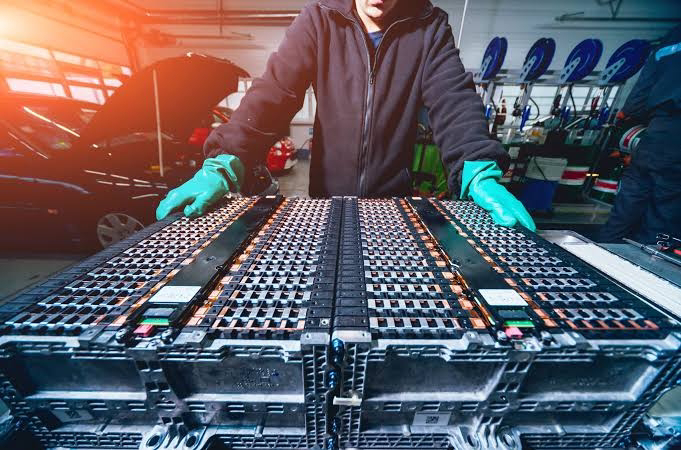
Solar Battery Manufacturing: A Step Towards Sustainable Energy


Solar energy has gained significant traction as one of the cleanest and most abundant sources of renewable energy. Solar panels are the most recognizable component of a solar energy system, but equally important are the solar batteries that store the energy produced by these panels. In this blog post, we will delve into the fascinating world of solar battery manufacturing and explore how it plays a vital role in harnessing the power of the sun.

Understanding Solar Batteries: Solar batteries are designed to store the excess energy generated by solar panels during periods of high sun exposure. These batteries store the energy in the form of chemical potential energy, which can then be used during times of low sunlight or at night. The key challenge in solar battery manufacturing lies in producing batteries that can efficiently store and release the stored energy, while being durable and cost-effective.
Types of Solar Batteries: a. Lead-Acid Batteries: Traditional lead-acid batteries have been used in solar energy systems for many years. These batteries are known for their reliability and affordability. However, they have lower energy density and shorter lifespan compared to newer battery technologies.

b. Lithium-Ion Batteries: Lithium-ion batteries have revolutionized the solar battery industry. These batteries are lightweight, have higher energy density, and longer lifespan compared to lead-acid batteries. They are perfect for residential and commercial solar energy systems.

c. Flow Batteries: Flow batteries are another emerging technology in the solar battery manufacturing industry. These batteries use two electrolyte solutions that flow through a system, which provides longer lifespans and better scalability.

Manufacturing Processes: Solar battery manufacturing involves several key processes, including:

Electrode Production: The production of positive and negative electrodes involves specially formulated materials, such as lithium, cobalt, and nickel. These materials are processed and coated onto metal foils to form the electrodes.
Separator Production: Separators are thin membranes that prevent the positive and negative electrodes from coming into direct contact with each other. They allow the flow of ions while preventing short circuits.
Cell Assembly: In this step, the electrodes and separator are brought together, and an electrolyte solution is added to facilitate the movement of ions within the battery.
Battery Packing: The assembled cells are then packed into battery modules or packs. These modules are responsible for managing and protecting the individual cells and providing a connection for external devices.

Quality Control and Safety: Solar battery manufacturing involves stringent quality control measures to ensure the durability, reliability, and safety of the batteries. Manufacturers implement thorough testing procedures to check each battery's performance, capacity, and resistance to environmental factors. Safety features, such as thermal protection and overcharge/over-discharge protection, are also integrated into the battery systems.

Conclusion: Solar battery manufacturing is a crucial aspect of the solar energy industry, enabling the efficient utilization of solar power. As advancements continue in battery technology, we can expect improved energy storage solutions that further enhance the viability of solar energy for residential, commercial, and even large-scale utility applications. With ongoing research and development, solar batteries are becoming more affordable, efficient, and sustainable, paving the way for a brighter, cleaner future powered by the Sun.

Sunday, July 2, 2023

The Solar Panel Manufacturing Process: Harnessing Clean Energy for a Sustainable Future

Introduction:

Solar panels have become synonymous with clean energy and are increasingly prevalent in our quest for a sustainable future. Understanding the manufacturing process behind these panels is crucial in appreciating their environmental impact and efficiency. In this blog post, we will delve into the intricate details of solar panel manufacturing, exploring the steps involved and the technologies used to transform raw materials into powerful, sunlight-harnessing devices.


Raw Material Acquisition:

The first stage of solar panel manufacturing begins with the procurement of raw materials. The primary components of solar panels include silicon wafers, tempered glass, aluminum frames, various chemicals, and conductive materials. Silicon, a widely abundant element, is the most crucial material, as it forms the basis of solar cell production.


Silicon Ingot Production:

To create silicon wafers, the raw silicon material undergoes a purification process. This involves heating and melting the silicon until it reaches a molten state. The molten silicon is then cooled and solidified to form cylindrical ingots or blocks, which are further sliced into thin wafers.


Wafer Fabrication:

The silicon wafers are refined and polished to achieve a smooth and flat surface. At this stage, the wafers undergo a series of chemical treatments and etching processes to remove impurities and ensure optimal conductivity. Dopants, such as boron or phosphorus, are added to create the necessary electric charge characteristics.

Solar Cell Assembly:

The prepared silicon wafers are transformed into solar cells through a series of intricate steps. The front surface of the wafer is coated with an anti-reflective material to increase light absorption, while the back surface is coated with a conductive layer to facilitate electron flow. Fine metal contacts are screen-printed onto the cell surface to collect the electrical current. 


Module Assembly:

In the module assembly stage, solar cells are interconnected and encapsulated to form a complete solar panel. The cells are soldered together using conductive adhesive, and a tempered glass sheet is placed on the front side for protection and enhanced durability. A polymer-based backsheet is applied to the rear surface to provide insulation and prevent moisture ingress. Additionally, an aluminum frame is added for structural support and to facilitate mounting.


Testing and Quality Assurance:

Every solar panel undergoes rigorous testing to ensure its efficiency and durability. Various parameters, such as electrical performance, temperature resistance, and resistance to environmental factors, are assessed. Panels that meet the quality standards are then ready for distribution and installation.


Conclusion:

Solar panel manufacturing is a sophisticated process that transforms raw materials into efficient energy-harvesting devices. The intricate steps involved, from the production of silicon wafers to the final module assembly, require specialized equipment and skilled labor. By understanding the manufacturing process, we can better appreciate the technological advancements and environmental benefits associated with solar energy. As the world shifts towards renewable energy sources, solar panels are at the forefront of this transition, offering a sustainable and efficient solution to our energy needs. 

Tuesday, June 13, 2023

Chhattisgarh and CREDA

 Chhattisgarh, located in central India, is a state known for its abundant natural resources, including significant potential for solar energy generation. To harness this potential and promote renewable energy, the Chhattisgarh government established the Chhattisgarh Renewable Energy Development Agency (CREDA). CREDA plays a crucial role in promoting and implementing various solar energy projects throughout the state. Here are some key aspects of solar energy in Chhattisgarh and the initiatives undertaken by CREDA:

  1. Solar Power Generation: Chhattisgarh has favorable solar irradiation levels, making it ideal for solar power generation. CREDA has been actively involved in setting up solar power projects, both large-scale and small-scale, across the state. These projects aim to increase the share of solar energy in the state's overall energy mix and reduce reliance on conventional fossil fuels.

  2. Solar Rooftop Installations: CREDA encourages the adoption of solar rooftop systems in residential, commercial, and industrial sectors. It provides financial incentives, subsidies, and technical assistance to individuals and organizations willing to install solar panels on their rooftops. By promoting rooftop solar, CREDA aims to utilize unused rooftop spaces and reduce the burden on the grid.

  3. Net Metering: CREDA facilitates net metering arrangements, allowing consumers to generate solar power for their own consumption and export excess power to the grid. Net metering enables consumers to offset their electricity bills and contribute to the overall solar energy generation in the state.

  4. Solar Parks: CREDA has been instrumental in developing solar parks in Chhattisgarh. Solar parks are large-scale projects that house multiple solar power plants in a single location. These parks provide the necessary infrastructure, such as transmission lines and substations, to facilitate the integration of solar power into the grid. CREDA identifies suitable sites, acquires land, and invites private developers to set up solar power projects within these parks.

  5. Solar Water Pumping: In rural areas where electricity supply is limited, CREDA promotes the use of solar-powered water pumping systems. These systems use solar energy to operate water pumps, providing access to clean water for agriculture, drinking, and other purposes.

  6. Awareness and Capacity Building: CREDA conducts awareness campaigns, workshops, and training programs to educate the public about the benefits of solar energy. It also trains technicians and entrepreneurs to enhance their skills in solar system installation, operation, and maintenance.

  7. Policy Support: CREDA collaborates with the Chhattisgarh government to develop favorable policies and regulations for solar energy. It provides recommendations for renewable energy targets, tariff structures, and other policy frameworks to encourage investment in solar power projects.

Overall, CREDA's efforts in Chhattisgarh have significantly contributed to the growth of solar energy in the state. Through various initiatives and policies, it aims to achieve a sustainable and clean energy future while stimulating economic development and job creation in the renewable energy sector.

Privacy Policy

 Privacy Policy

RGP Developers built the My Solar BB app as an Ad Supported app. This SERVICE is provided by RGP Developers at no cost and is intended for use as is.

This page is used to inform visitors regarding our policies with the collection, use, and disclosure of Personal Information if anyone decided to use our Service.

If you choose to use our Service, then you agree to the collection and use of information in relation to this policy. The Personal Information that we collect is used for providing and improving the Service. We will not use or share your information with anyone except as described in this Privacy Policy.

The terms used in this Privacy Policy have the same meanings as in our Terms and Conditions, which are accessible at My Solar BB unless otherwise defined in this Privacy Policy.

Information Collection and Use

For a better experience, while using our Service, we may require you to provide us with certain personally identifiable information. The information that we request will be retained by us and used as described in this privacy policy.

The app does use third-party services that may collect information used to identify you.

Link to the privacy policy of third-party service providers used by the app

Log Data

We want to inform you that whenever you use our Service, in a case of an error in the app we collect data and information (through third-party products) on your phone called Log Data. This Log Data may include information such as your device Internet Protocol (“IP”) address, device name, operating system version, the configuration of the app when utilizing our Service, the time and date of your use of the Service, and other statistics.

Cookies

Cookies are files with a small amount of data that are commonly used as anonymous unique identifiers. These are sent to your browser from the websites that you visit and are stored on your device's internal memory.

This Service does not use these “cookies” explicitly. However, the app may use third-party code and libraries that use “cookies” to collect information and improve their services. You have the option to either accept or refuse these cookies and know when a cookie is being sent to your device. If you choose to refuse our cookies, you may not be able to use some portions of this Service.

Service Providers

We may employ third-party companies and individuals due to the following reasons:

  • To facilitate our Service;
  • To provide the Service on our behalf;
  • To perform Service-related services; or
  • To assist us in analyzing how our Service is used.

We want to inform users of this Service that these third parties have access to their Personal Information. The reason is to perform the tasks assigned to them on our behalf. However, they are obligated not to disclose or use the information for any other purpose.

Security

We value your trust in providing us your Personal Information, thus we are striving to use commercially acceptable means of protecting it. But remember that no method of transmission over the internet, or method of electronic storage is 100% secure and reliable, and we cannot guarantee its absolute security.

Links to Other Sites

This Service may contain links to other sites. If you click on a third-party link, you will be directed to that site. Note that these external sites are not operated by us. Therefore, we strongly advise you to review the Privacy Policy of these websites. We have no control over and assume no responsibility for the content, privacy policies, or practices of any third-party sites or services.

Children’s Privacy

These Services do not address anyone under the age of 13. We do not knowingly collect personally identifiable information from children under 13 years of age. In the case we discover that a child under 13 has provided us with personal information, we immediately delete this from our servers. If you are a parent or guardian and you are aware that your child has provided us with personal information, please contact us so that we will be able to do the necessary actions.

Changes to This Privacy Policy

We may update our Privacy Policy from time to time. Thus, you are advised to review this page periodically for any changes. We will notify you of any changes by posting the new Privacy Policy on this page.

This policy is effective as of 2023-06-13

Contact Us

If you have any questions or suggestions about our Privacy Policy, do not hesitate to contact us at purena.kamal1@yahoo.com.

This privacy policy page was created at privacypolicytemplate.net and modified/generated by App Privacy Policy Generator

Tuesday, November 6, 2018

COMMUNITY LIGHTING THROUGH SOLAR HIGH MAST IN THE STATE OF CHHATTISGARH


    As we aware, that Chhhattisgarh is a new state, reformed in year 2000. 80% population of Chhattisgarh State is rural and approximately 40% of the state is forest cover. Most of the population of the state lives in rural or small Towns. Since the constitution of the state, state Government is mainly focus on development of small towns and villages.

    Availability of community lighting in public places like: Bus stand, Gram Panchayat, Hat Bazar and other social places is one the basic need for development of any Town. State government is very much active to provide the lighting facilities through conventional Power and non-conventional power too. As we mentioned Chhattisgarh has 40% of forest cover areas, because of this some of the villages are unapproachable, hence the supply of power in such places is one of the big challenge for the Government. To overcome this problem, Government is focused to electrified these villages through Non Conventional Power.


    For community lighting purpose, CREDA has invented a Solar Power operated High Mast System. Solar High Mast system consist of 06 Nos. 30 W LED lights, which operates through Lithium-Ion battery. These batteries are charged through suitable capacity of Solar Panels, which are installed at the top of the High Mast Pole. It is an stand alone system consist of dusk to dawn switch for automatic operation of the system. CREDA has initially installed this system in Energy Education Park, Raipur in Financial Year 2014-15. Based on the successful operation at Energy park, State Government has decided to install this system in villages and small towns, which are actual needy places.


Basic merits of Solar High Mast System are as follows:-
1.      This system is operated through Solar Power Systems, hence, no conventional power is required,
2.      It is an automated system, no manpower is required to on -off the system in daily basis,
3.      It is a stand-alone system hence, Power Distribution Network is not required,
4.      Lithium Ion battery is being used, hence this system requires minimum maintenance,

Social impact of Solar High Mast System:-
1.      It provides the lighting facility in rural backward area, which helps the villages to enhance the market time span during night,
2.      It provides the lighting in Bus Stand, Railway station and other transport areas, hence the roaming during night to such places are now safe, because of availability of lighting.
3.      Solar High Mast system is fully solar Power Operated system, hence it is a zero carbon emission lighting system,
4.      Local administration body of the village is not require to pay any monthly electricity bill to Power Distribution Company,
5.      This system provides the safe environment by green lighting to resident people and the visitors as well,
6.      Availability of lighting at any market place, attracts the businessman/ entrepreneur to enhance their business in such places...

Thursday, August 10, 2017

Solar Water Purification System


As we aware, that Chhhattisgarh is a new state, reformed in year 2000. 80% population of Chhattisgarh State is rural and approximately 40% of the state is forest cover. Most of the population of the state lives in rural or small Towns. Since the constitution of the state, state Government is mainly focus on development of small towns and villages. Chhattisgarh is very reach in minerals like Iron, coal etc. Due to these minerals ground water has very high level of contamination and dissolved solids.


State Government is very much focus to provide the safe drinking water to the people.  As mentioned Chhattisgarh has 40% of forest cover areas, because of this some of the villages are unapproachable, hence the supply of power in such places is one of the big challenge for the Government and some of the areas are facing the problem of voltage fluctuation. Due to unavailability of electricity or voltage fluctuation, operation of Pumps and Water Purification systems are very difficult in such areas. To overcome this problem, CREDA has introduced a Solar Power operated Water Purification System.


This system consist a submersible pump, water purification system, Storage Tank, 3 Mtr height elevated structure, Solar Modules and Water dispenser along with the sensing machine. Submersible pump and water purification system are operated through the solar Power taken from the Solar Modules, which are installed at the top of the 03 Mtr. Height structure. It is an stand alone automatic operated system.

Basic merits of Solar based water purification System are as follows:-
1.      This system is operated through Solar Power Systems, hence, no conventional power is required,
2.      It is an automated system, no manpower is required to on -off the system in daily basis,
3.      It is a stand-alone system hence, Power Distribution Network is not required,

Social impact of Solar based water purification System:-
1.      It provides the pure drinking water to the villagers,
2.      Villagers are not require to go long for taking the drinking water,
3.      By using the potable water for drinking, many of disease like jaundice, typhoid etc may be avoided.
4.      Healthy person can do their best on their work.
5.      Local administration body of the village is not require to pay any monthly electricity bill to Power Distribution Company,
6.      This system provides the safe environment to resident people and the visitors as well,

Saturday, July 1, 2017

SOLAR COMMUNITY IRRIGATION SCHEMES IN C.G.
1.      Introduction: Solar Community Irrigation is a type of irrigation system where a group of farmer can use a single water source for irrigating their lands with the help of Solar Systems. The water source can either be a Surface water source or be a Ground water source. But in view of continuous lacking ground water level we recommend to use Surface Water Sources for Solar Community Irrigation Schemes.
2.      Need of Solar Community Irrigation System : In Rural and/or undeveloped areas of Chhattisgarh where there is no power grid/less availability of electricity and more water is needed the choice for powering pumps are usually a fuel driven engine, usually diesel. If we take a look in the field of agriculture in Chhattisgarh state, thousands of waters sources are not in use in absence of connectivity of those water sources from grid line. Therefore the concerned farmers do not have any option for irrigating their lands except natural rainy water.
               In view of the above Solar community irrigation scheme is the best option for those kinds of farmers, whose farming lands are located on such places, can be able to use surface water sources available near their farming lands.


3.     CREDA’s Initiative for Solar Community Irrigation System:
Completed Projects: CREDA has initiated with some small projected area in the field of Solar Community Irrigation. Those schemes were funded by Tribal Welfare Department.  CREDA has completed a total no. of 125 small projects with Solar Pumps ranging from 02-05 HP under the scheme in Chhattisgarh till now.

4. Success Story on a Completed Project of Solar Community Irrigation Scheme of District Jashpur:
Chhattisgarh state consists of 27 districts, Jashpur is one of the backward districts of the state. It is situated in the north-eastern part of the State. Area of the district is 6088 sq Km. It is rich in forest resources and the majority of its Population belongs to the Scheduled Tribes. Land is mainly of two types, Balua Soil in hilly region which is not fertile, mixed type of crop is grown here, land in plain area is fertile. The main perennial rivers of the district are Lawa, Ib, Maini and Shankh. climate of the district is very peculiar with upper ghat much colder while lower region is warm. The climate here is moist as heavy rainfall occurs here. The average rainfall of the district is 1512.8 MM. total irrigated area in jashpur is 291497 hectare out of which 17812 hectare is net cropped area. As per  official data, there are 41 minor irrigation system developed. There are many tiny & small stop dams proposed under various scheme which will bring more area under agriculture.
Ever since emergence of Jashpur as district, it was evident that it has great potential to deliver true sense of high economic value to the state as well as country. To keep up to expectation, it was necessary to fill the critical gaps in the area of infrastructure development, livelihood promotion and other related activities. So, special scheme was required to meet the challenges ahead of tribal district jashpur.
Considering all above mentioned facts CREDA (Chhattisgarh State Renewable Energy Development Agency ) has  formulated and completed two Solar Community Minor Lift Irrigation Schemes in villages Harradipa and Baghmudi of block Duldula of Jashpur District. In These Villages a large no. of farmers were not having any means of electricity for Irrigation. In survey we found that there is approximately 130 acre land was continuously not irrigated in other seasons except rainy season because of lack of electricity. There were having only one-one bore near there agricultural lands in villages. But because of unavailability of electricity, the available bores were also not in use.  Because of unavailability of continuous electricity farmers have no choice except to take only one crop that too in rainy season. For irrigation they were dependent on diesel pumps for which they had to make lot of efforts to buy and bring diesel from distant places.
Under these Lift Irrigation Schemes two Solar Surface pumps one in each village are installed at common water source ie stop dams on perennial rivers. Committees of Farmers are formed  for daily operation and maintenance of the pumps, which also controls scheduling and distribution of water among farmers. Farmers also contributed land for installation of Solar Pumps and construction of overhead tanks of 5 KL in each village.
The outcome of these projects so far is as under:
·         A total of about 30 Acres of farm land is being irrigated under this project.
·         A total of about 2 Lac. litres of water is given for irrigation per day in each village.
·         About 12 Nos. of families were benefitted with this project, which are now growing three crops  like mustard, Paddy, Maize, Potato and other Vegetables etc
·         The economy of these farmers is increased substantially as they don't have to pay for diesel for irrigation after installation of the Solar Pumps.
·         Training was given to farmers to handle troubleshooting related to pump sets.
The basic outlay of providing water supply to the farms is done by constructing a RCC tank, nearby to the solar pump which serves a total of 108 acres of farm land annually. A total of 16 panels (300 Watt) were installed, which is sufficient to run a 5 HP solar pump set.

BENEFITS AND IMPACT OF THE PROJECT

The impact of these kinds of projects on the villagers is immense. Earlier Mono-cropping was the usual practice but with the advent of this community based lift irrigation project, the farmers have started cultivating more crops annually. Since the topography and little options of irrigation facilities available to the farmers makes demand for these kinds of projects. This project has proved to be a boon for the poor farmers since enhances their productivity at a minimum cost and serves as a cleaner and greener option of irrigation.

Subsistence farming is a past and forgotten word for the farmers. This has really helped them to improve their standard of living.


Friday, May 9, 2014

Solar Water Heater System


Solar Water Heaters


Hi this is Kamal Purena. My new post is about solar water heating systems. First of all i want to describe about Solar water heaters —Solar water heaters also called solar domestic hot water systems—can be a cost-effective way to generate hot water for your home. They can be used in any climate, and the fuel they use—sunshine—is free.

There is a great achievement done by CREDA Mahasamund in the field of Solar Water Heating System in Year 2013-14. With the beneficiary contribution received from BRGF 2013-14 Head  and CREDA Subsidy There are 37 nos. of solar water heating systems ( 500 Liter Per Day Capacity each ) have been installed and successfully commissioned by CREDA in All Girls ashram/ Hostels ( Organized by Tribal Department ) District - Mahasamund. Out of those 37 no. of Solar water heating Systems 332 are FPC Model whereas another 05 are ETC Model. 


 We got some feedback from the children and from their respective Ashram/ Hostel incharge. They told us that before installing this all systems max. no. of children were infected from various kind of skin problems every year. but After using the hot water for their various use like taking bath, use in drinking water , use in washing the cloths etc. there are no. any kind of skin problem faced by them. So, After successful result of those Solar Water Heating Systems we are again going to install 50 no. of Solar water heating system in the same District of Chhattisgarh ( With the financial help of District Administration - Mahasamund & CREDA Subsidy   ) .


How They Work


Solar water heating systems include storage tanks and solar collectors. There are two types of solar water heating systems: active, which have circulating pumps and controls, and passive, which don't.


Most solar water heaters require a well-insulated storage tank. Solar storage tanks have an additional outlet and inlet connected to and from the collector. In two-tank systems, the solar water heater preheats water before it enters the conventional water heater. In one-tank systems, the back-up heater is combined with the solar storage in one tank.


Three types of solar collectors are used for residential applications:
· Flat-plate collector


Glazed flat-plate collectors are insulated, weatherproofed boxes that contain a dark absorber plate under one or more glass or plastic (polymer) covers. Unglazed flat-plate collectors—typically used for solar pool heating—have a dark absorber plate, made of metal or polymer, without a cover or enclosure.

· Integral collector-storage systems


Also known as ICS or batch systems, they feature one or more black tanks or tubes in an insulated, glazed box. Cold water first passes through the solar collector, which preheats the water. The water then continues on to the conventional backup water heater, providing a reliable source of hot water. They should be installed only in mild-freeze climates because the outdoor pipes could freeze in severe, cold weather.
· Evacuated-tube solar collectors


They feature parallel rows of transparent glass tubes. Each tube contains a glass outer tube and metal absorber tube attached to a fin. The fin's coating absorbs solar energy but inhibits radiative heat loss. These collectors are used more frequently for U.S. commercial applications.


There are two types of active solar water heating systems:
· Direct circulation systems


Pumps circulate household water through the collectors and into the home. They work well in climates where it rarely freezes.
· Indirect circulation systems


Pumps circulate a non-freezing, heat-transfer fluid through the collectors and aheat exchanger. This heats the water that then flows into the home. They are popular in climates prone to freezing temperatures.


Passive solar water heating systems are typically less expensive than active systems, but they're usually not as efficient. However, passive systems can be more reliable and may last longer. There are two basic types of passive systems:
· Integral collector-storage passive systems


These work best in areas where temperatures rarely fall below freezing. They also work well in households with significant daytime and evening hot-water needs.
· Thermosyphon systems


Water flows through the system when warm water rises as cooler water sinks. The collector must be installed below the storage tank so that warm water will rise into the tank. These systems are reliable, but contractors must pay careful attention to the roof design because of the heavy storage tank. They are usually more expensive than integral collector-storage passive systems.


Solar water heating systems almost always require a backup system for cloudy days and times of increased demand. Conventional storage water heaters usually provide backup and may already be part of the solar system package. A backup system may also be part of the solar collector, such as rooftop tanks with thermosyphon systems. Since an integral-collector storage system already stores hot water in addition to collecting solar heat, it may be packaged with a demand (tankless or instantaneous) water heater for backup.


For more information about solar water heating system components, see the following information:


· Heat Exchangers for Solar Water Heating Systems
· Heat-Transfer Fluids for Solar Water Heating Systems

Selecting a Solar Water Heater


Before you purchase and install a solar water heating system, you want to do the following:

· Consider the economics of a solar water heating system

· Evaluate your site's solar resource
· Determine the correct system size
· Determine the system's energy efficiency
· Estimate and compare system costs
· Investigate local codes, covenants, and regulations.
For information about specific solar water heater models and systems, see the Product Information resources listed on the right side of this page (or below if you've printed the page).
Installing and Maintaining the System


The proper installation of solar water heaters depends on many factors. These factors include solar resource, climate, local building code requirements, and safety issues; therefore, it's best to have a qualified, solar thermal systems contractor install your system.

After installation, properly maintaining your system will keep it running smoothly. Passive systems don't require much maintenance. For active systems, discuss the maintenance requirements with your system provider, and consult the system's owner's manual. Plumbing and other conventional water heating components require the same maintenance as conventional systems. Glazing may need to be cleaned in dry climates where rainwater doesn't provide a natural rinse.

Regular maintenance on simple systems can be as infrequent as every 3–5 years, preferably by a solar contractor. Systems with electrical components usually require a replacement part or two after 10 years. For more information about system maintenance, see the following:

· Solar Water Heating System Maintenance and Repair
· Solar Water Heating System Freeze Protection
· Scaling and Corrosion in Solar Water Heating Systems
When screening potential contractors for installation and/or maintenance, ask the following questions:
· Does your company have experience installing and maintaining solar water heating systems?
Choose a company that has experience installing the type of system you want and servicing the applications you select.

· How many years of experience does your company have with solar heating installation and maintenance?
The more experience the better. Request a list of past customers who can provide references.

· Is your company licensed or certified?
Having a valid plumber's and/or solar contractor's license is required in some states. Contact your city and county for more information. Confirm licensing with your state's contractor licensing board. The licensing board can also tell you about any complaints against state-licensed contractors.


For contractor information, see the Professional Services resources listed on the right side of this page (or below if you've printed it out).
Improving Energy Efficiency

After your water heater is properly installed and maintained, try some additionalenergy-saving strategies to help lower your water heating bills, especially if you require a back-up system. Some energy-saving devices and systems are more cost-effective to install with the water heater.

Solar Battery Manufacturing: A Step Towards Sustainable Energy

Solar energy has gained significant traction as one of the cleanest and most abundant sources of renewable energy. Solar panels are the most...